
The Power of the "Digital Twin"
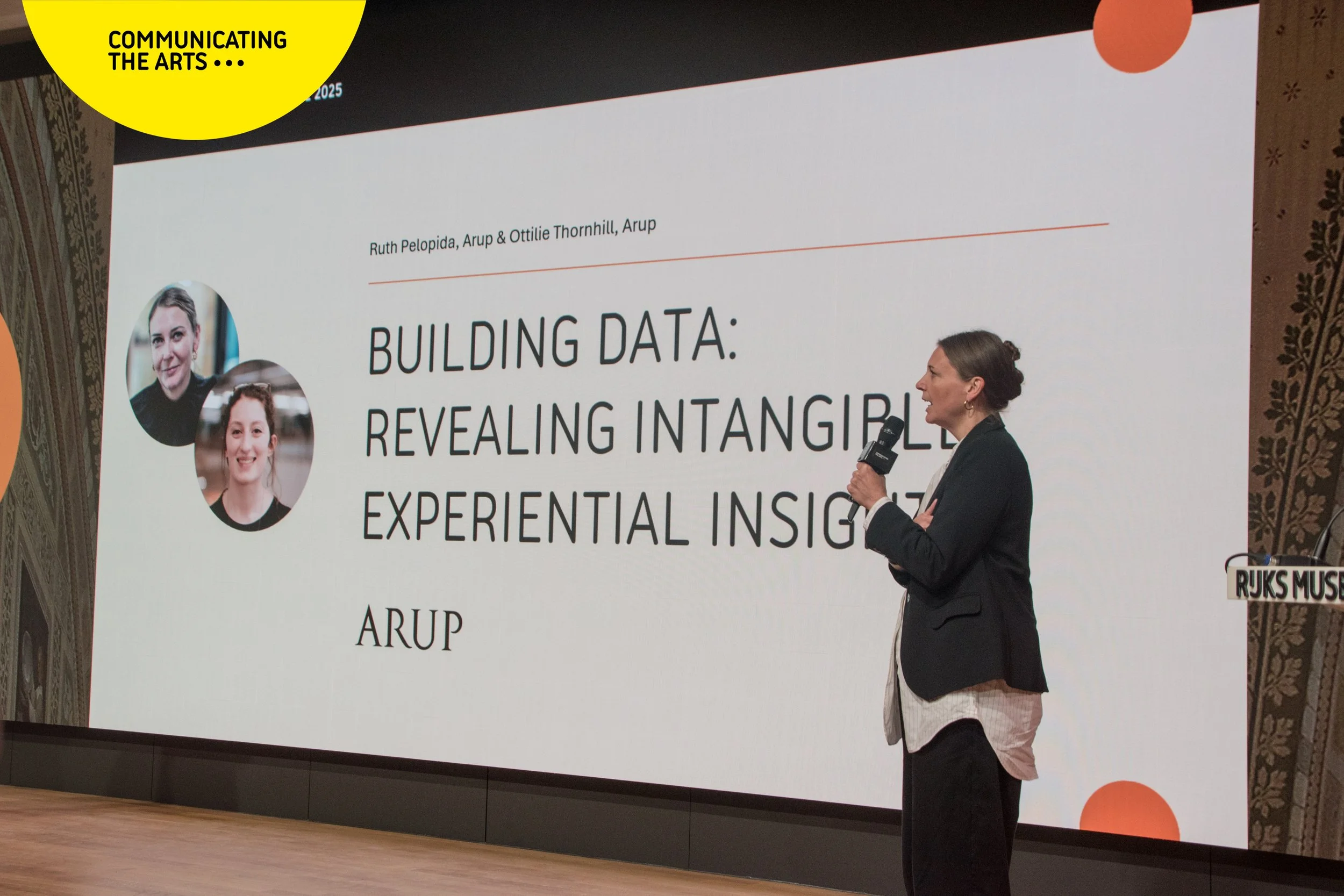
Building Data: Revealing Intangible Experiential Insights | Arup @ CTA Amsterdam 2025
What if your building could talk to you? 🏛️✨
In the world of cultural management, we often focus on the art on the walls or the performance on the stage. But what about the spaces in between? The flow of the lobby, the comfort of the café, and the "invisible" environmental factors that dictate whether a visitor feels welcomed or weary?
At Communicating The Arts Amsterdam 2025, we were joined by Ruth Pelopida (Associate Director) and Ottilie Thornhill (Investment Manager) from Arup’s Venue Design practice in London. Their keynote, "Building Data: Revealing Intangible Experiential Insights," challenged the industry to stop viewing buildings as passive shells and start seeing them as living organisms.
Watch the Full Keynote below or Click here to watch the presentation on YouTube
The Power of the "Digital Twin"
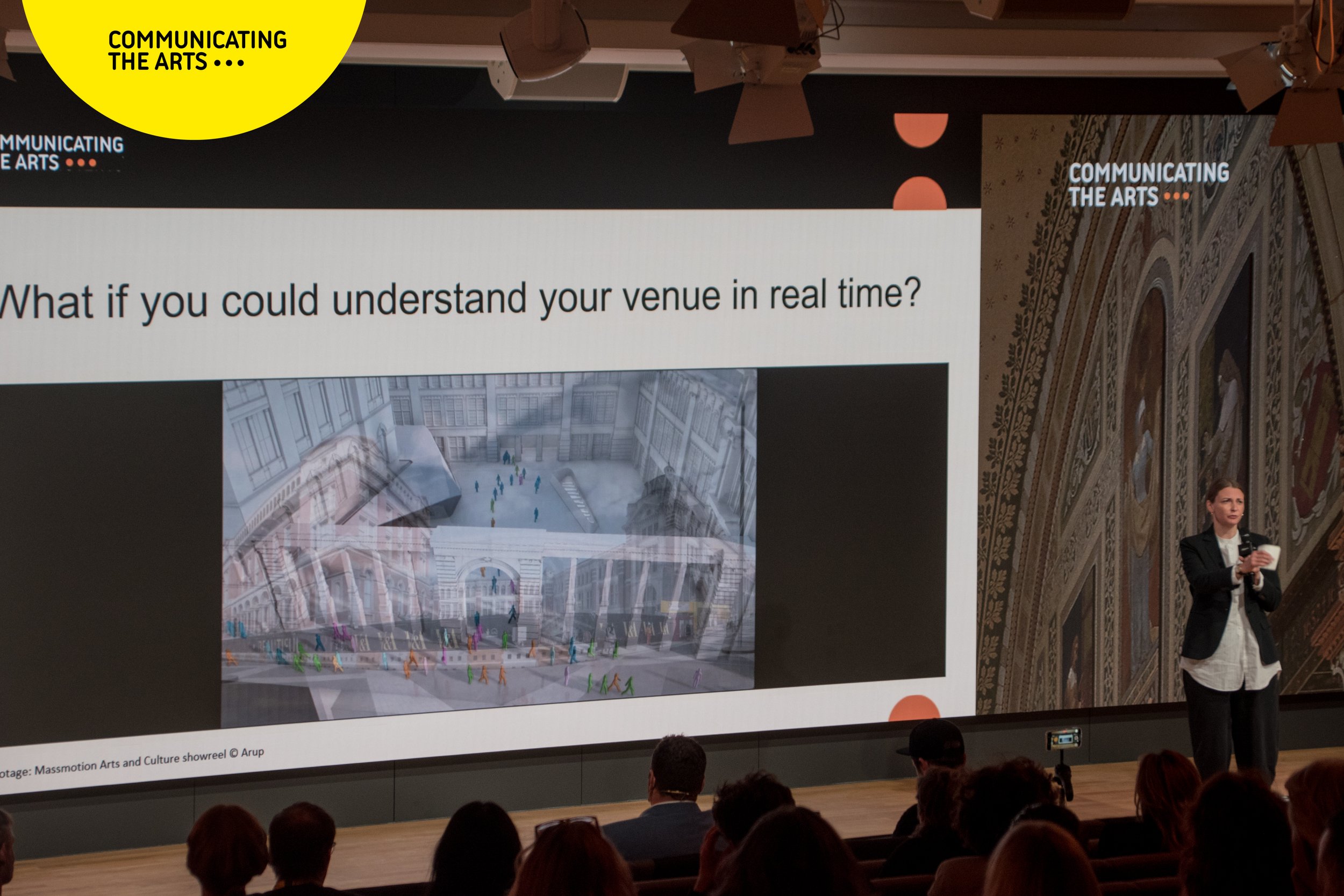
The centerpiece of the Arup presentation was the implementation of Digital Twins—virtual replicas of physical buildings that live and breathe in real-time. While many associate "data" with cold numbers, Ruth and Ottilie demonstrated how it can be used to unlock deep empathy for the visitor.
Key Takeaways from the Session:
Beyond the Ticketed Space: An effective digital twin doesn't just monitor the gallery or theater; it looks at the non-ticketed areas like toilets, shops, and entrances. These "in-between" spaces often define the overall quality of a visitor's experience.
Human-Centric Monitoring: By tracking data like CO2 levels and crowd density, operators can proactively manage audience comfort. If the air quality dips, the building "tells" the operator to adjust ventilation before the audience even notices the fatigue.
Predictive Maintenance & Sustainability: Data isn't just for comfort—it’s for survival. Arup shared a case study where a digital twin project helped reduce energy consumption by a staggering 39%, proving that social goals and economic viability can go hand-in-hand.
Meet "Charlotte": A Building with a Personality
Perhaps the most captivating part of the keynote was Project Charlotte. To make complex data accessible to staff and stakeholders, Arup anthropomorphized a building’s data into a character.
As the building becomes more crowded or the environment shifts, "Charlotte’s" appearance changes. This playful yet powerful metaphor allows facilities teams, designers, and curators to align on the "health" and "mood" of their venue instantly.
Moving From Guesswork to Strategy
As technology like LIDAR scanning becomes more accessible (it’s likely already in your smartphone!), the Arup team encourages cultural leaders to be intentional with their data adoption.
The goal isn't just to collect data—it's to use it to build bridges between facilities management and the audience. When we understand the "invisible layers" of our public spaces, we shift from guesswork to strategic, human-centered insight.
Ready to transform your venue?
Watch the full session below to learn how you can start using the Digital Twins Toolkit to prepare your institution for the future.
👇 Watch Now
Did you miss us in Amsterdam? Join the conversation at our next edition!
🎟️ Get your pass for Communicating The Arts – Ottawa-Gatineau 2026:https://my.weezevent.com/communicating-the-arts-ottawa-2026