
Riva Harrison and Ryan Hughes
Riva Harrison and Ryan Hughes
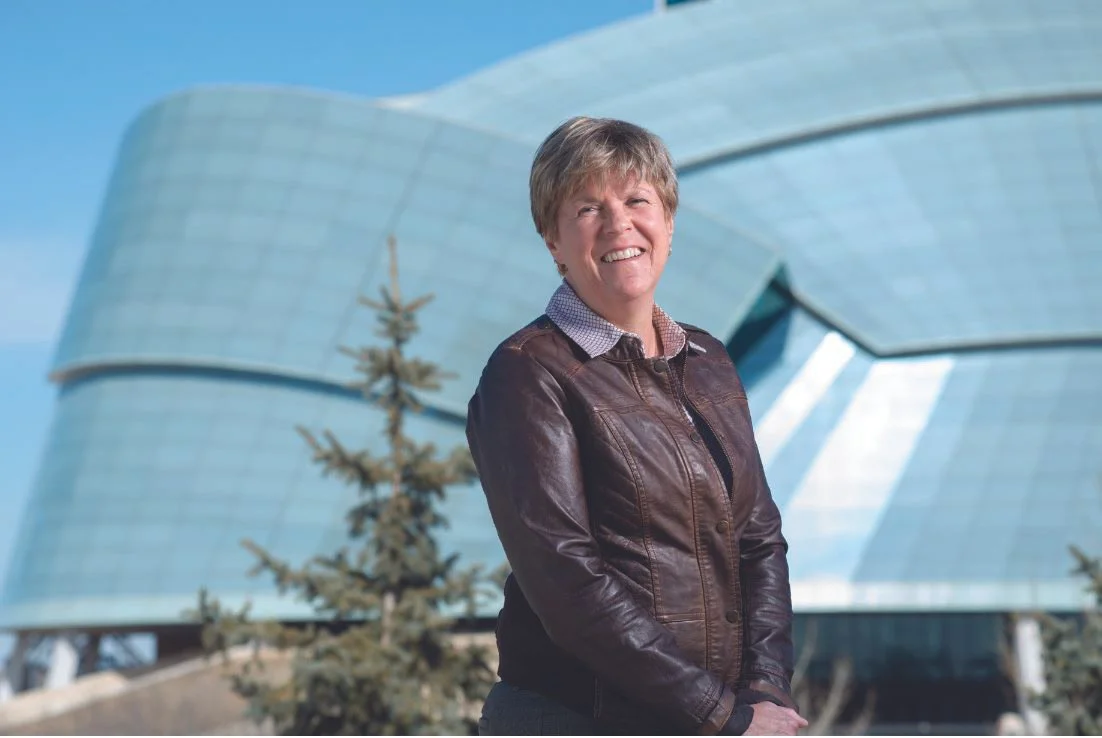


Riva Harrison, Vice-President, Education and Public Affairs, Canadian Museum for Human Rights (Winnipeg, Canada)
With over 20 years of senior leadership experience in strategic planning, public engagement, communications, and marketing, Riva Harrison has been leading the Education and Public Affairs teams at the Canadian Museum for Human Rights since 2021.
Key initiatives include leading the creation of a new brand for the Museum, championing the expansion of human rights education programs across Canada, and helping guide the development of the blockbuster exhibition Love in a Dangerous Time, winner of the 2026 Governor General’s Award for Excellence in Museums: History Alive!
Riva began her career as a journalist, winning awards for her coverage of human rights issues in Manitoba.
Ryan Hughes, Chief Strategy Officer and Head of Client Success, Humanity (Toronto, Canada)
Over almost two decades of actionable, insight-driven thinking, Ryan has developed an innovative approach to behaviour-led strategic planning that has seen him working for agencies, start-ups, political campaigns, and global brands, as well as being the recipient of multiple national marketing awards.
As Chief Strategy Officer and Head of Client Success at Toronto-based brand transformation agency Humanity, Ryan works with clients across Canada to help transform their brands to play a more meaningful role in the well-being of their brand communities.
Reimagining a Museum: The Challenge of Branding Human Rights
The Canadian Museum for Human Rights holds a unique place in the cultural world. As the first museum dedicated entirely to human rights, it was created to inspire people to reflect on the past, understand the present, and help build a better future. But that ambition raised an unusual challenge: how do you brand a museum devoted to an idea as vast and complex as human rights?
When Humanity partnered with the museum to reposition its brand, the team quickly realized there was no playbook for communicating human rights to a broad public audience. The answer would not come from traditional branding alone — it would come from understanding how people actually think about the issue.
Through a national behavioural research program — including psychoanalytic “Mind Model Labs,” population-scale surveys, and semiotic analysis — the team explored how Canadians process human rights. What emerged was a powerful insight: people move through a psychological journey from sympathy to empathy to empowerment before they are ready to engage or act. This insight reshaped the museum’s entire communication strategy.
Rather than presenting human rights as a legal framework or abstract concept, the museum reframed its role as helping people move along that human journey — building empathy first and then empowering action.
The result was a new brand platform rooted in a simple but powerful idea: human rights are not just principles to believe in — they are actions we take together.
In this talk, Riva Harrison and Ryan Hughes will share the research, strategy, and creative thinking behind the transformation — and what cultural institutions can learn about building trust by deeply understanding their audiences.
Before We Think: The hidden psychology of branding
People never encounter a brand with a blank mind. They bring a lifetime of experiences, associations, beliefs and motivations that shape what a brand means to them. Long before we consciously evaluate a brand, our minds are already at work, filtering what we see and hear through everything we know, feel and believe.
Yet traditional approaches to branding often begin with the organization: what makes us different, what do we stand for, and what do we want people to think about us? Far less attention is given to what audiences already think, and how those existing mental models influence their perceptions, expectations and behaviours.
Drawing on behavioural science and the psychology of human decision-making, Ryan Hughes, Chief Strategy Officer at Humanity, will explore the powerful forces operating beneath our conscious relationships with brands. From the influence of childhood experiences and cultural associations to the role of identity, belonging and personal motivations, he'll examine why the same brand can mean fundamentally different things to different people.
Through examples and practical insights, Ryan will challenge conventional approaches to brand building and introduce a more human-centred perspective: one that begins not with what organizations want to communicate, but with understanding the people they're trying to reach.
Because the most powerful brands don't simply shape what people think. They connect with what's already there — before we think.